One good scythe per farm, could revolutionize small-scale farming.Mow tall grass and weeds with ease. Harvest your own hay, bedding, and mulch from your own land, without the use of heavy, expensive, noisy, and polluting machines. Even grow and harvest your own heirloom grains. My mission is to provide the best performing scythes available, and the knowledge necessary for people to be able to utilize them to their fullest ecological potential.
|
|
NO NOISE, NO FOSSIL FUELS, NO POLLUTION
Whether you are alarmed about Climate Catastrophe, Peak Oil, Social Justice, Health Care, Food Safety & Security, or all of the above; at their roots, they all have one solution in common: We must fundamentally change the way we grow our food! Big, mechanized, chemical agriculture is ruining our health, depleting our soil, building up toxins in our environment, eroding and leaching the soil, massively increasing CO2 levels in our atmosphere, and financially devastating the closest thing that we have to sustainable farmers; namely small family farms.
Peak Oil expert Richard Heinberg speculates that in order to continue to grow the same amount of food in the future, without burning fossil fuels, we will need 40-50 million farmers, farming 3-50 acres, mostly with hand tools. No, not like in the Middle Ages. We are talking about appropriate technology here, and fundamentally rethinking our growing methods to work with Nature.
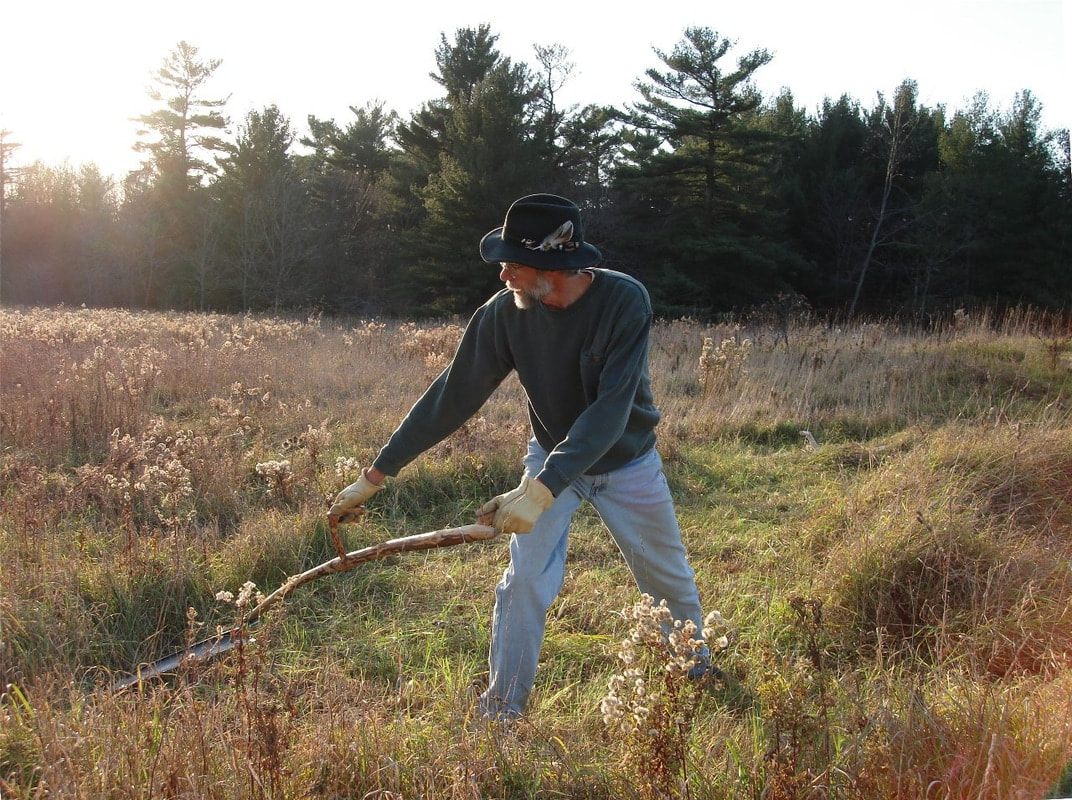
Small-scale farmers, meet one of your new tools. The cutting edge technology of the European scythe:
(Note: The Mystic Prairie Scythe Shop is now known as One Scythe Revolution!)
Why buy a scythe from One Scythe Revolution?
Get started right the first time! I have more than a decade of scything and teaching experience. I have the training to be the USA's only member of the International Scythe Network. I myself use a scythe intensively. I've been been farming with a scythe since 2001, and mow on nearly a daily basis. I have been teaching scythe workshops since 2006, and I also teach customers that visit me in person. Teaching so many workshops and individuals over the years has helped me evolve my teaching methods as to what people really need to know to be effective as quickly as possible. With your scythe outfit purchase you get a detailed instructional email with links to my videos, along with an invitation to my scythe forum that makes it easy for you to ask follow-up questions.
When I first declared my intention in 1999 to start a scythe-based natural farm, my friends told me skeptically that it would be too much work. Alas, with the scythe equipment and instructions available at the time, they were correct. Luckily for you, I am very persistent and sought out better instructions. I discovered there was a much more proficient level of scything equipment available in Europe, but not here. So I took it upon myself to start importing the better scythe equipment and other tools. I am continuously seeking out better tools to make this vision of hand-tool scaled, natural farming/permaculture easier to do. I test and use every product myself, so I know that they will work like I say they do. With many of the products I carry, I am either the first, or the only scythe seller in the US to carry these tools. With One Scythe Revolution you are sure to be on the cutting edge. - Botan Anderson
When I first declared my intention in 1999 to start a scythe-based natural farm, my friends told me skeptically that it would be too much work. Alas, with the scythe equipment and instructions available at the time, they were correct. Luckily for you, I am very persistent and sought out better instructions. I discovered there was a much more proficient level of scything equipment available in Europe, but not here. So I took it upon myself to start importing the better scythe equipment and other tools. I am continuously seeking out better tools to make this vision of hand-tool scaled, natural farming/permaculture easier to do. I test and use every product myself, so I know that they will work like I say they do. With many of the products I carry, I am either the first, or the only scythe seller in the US to carry these tools. With One Scythe Revolution you are sure to be on the cutting edge. - Botan Anderson
Europe's Best Scythe Equipment
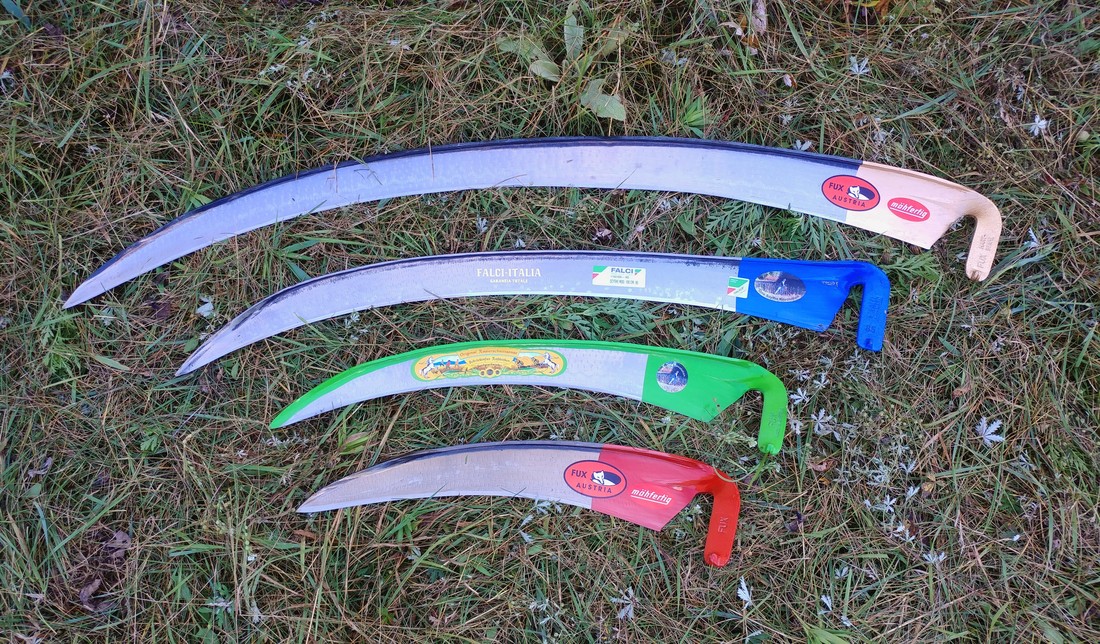
European Scythe BladesI import and sell the best scythe blades I can get from Europe. I stock Fux, Falci, and Arti brand scythe blades for a wide range of vegetation and mowing conditions and budgets. All my scythe blades are factory sharpened and ready to mow. They are also interchangeable on the snaths that I sell.
|
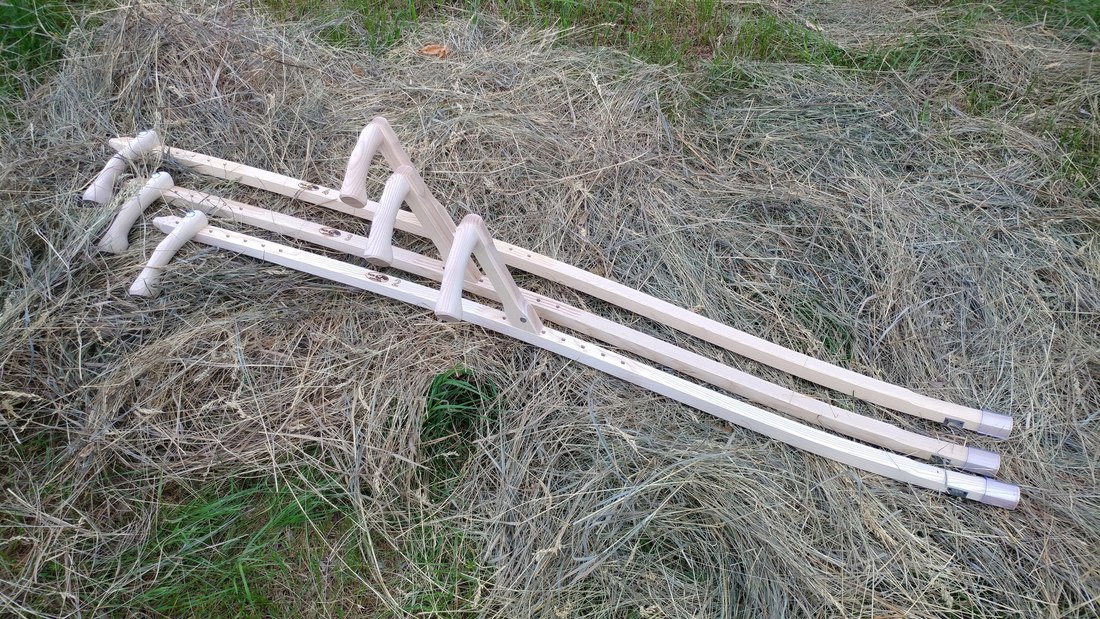
Adjustable SnathsScythe handles are called snaths. Fux has done an amazing job in developing the world's best mass produced, adjustable wooden snath for European scythe blades. All components are elegantly designed, and precision manufactured, and function beautifully. Available in three height ranges. No need for custom measurements. Simply pick out the size range for your height and fine-tune the settings as needed when you mow. They are adjustable! I am the only retailer in the USA that sells these snaths.
|
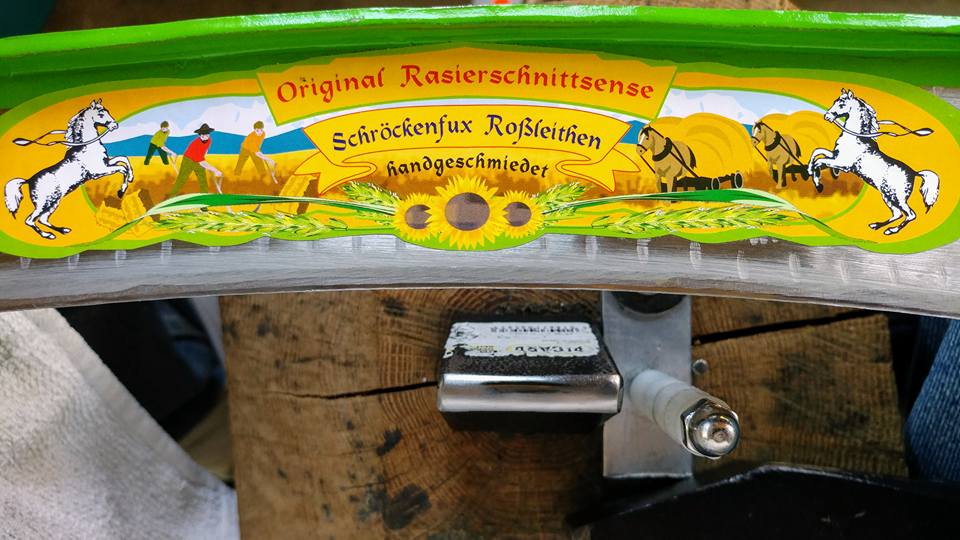
Sharpening Equipment A sharp blade is the key to success with a scythe. I have the finest and broadest selection of scythe whetstones, and peening supplies in America. And to help you get off to a good start, I have a series of straight-forward online instructional pages, manuals, and videos to help you develop your sharpening skills step-by-step.
|
America's Best Scythe Instructions
One Scythe Revolution is a member of the International Scythe Network.
"Wooo hooo! I'm scything! I scythe! I'm ever so happy to have this new tool. ...Thank you for being there to sell scythes like this in the U.S.A.. I searched several websites. I must say, your site is straightforward and was the easiest for me to understand. C.H. - Colorado
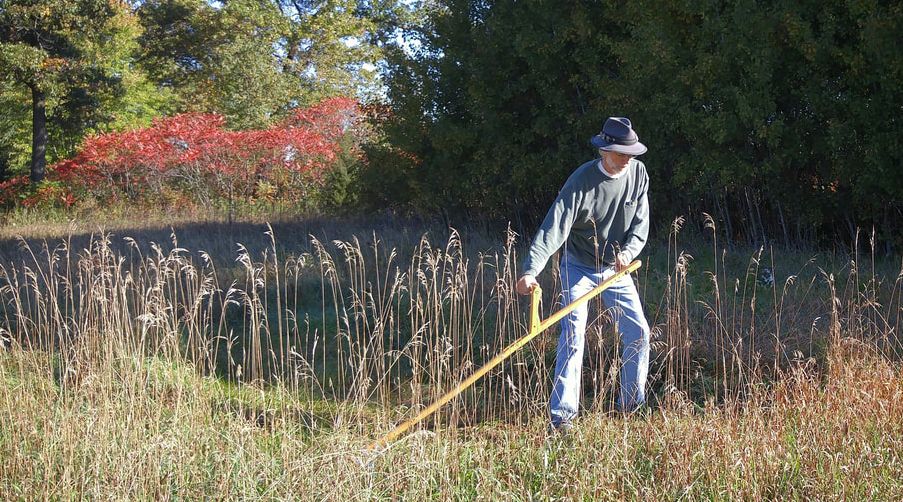
Online InstructionsTo scythe well requires a specific technical understanding of the tool, and the development of many new skills. Scythes do not work the way most people intuitively assume they do. When I first started scything in 2001, I did not know any more than you do right now. I know exactly where you are at. Here on this website is the information and the equipment that, in hindsight, I wish I had been able to start out with.
|
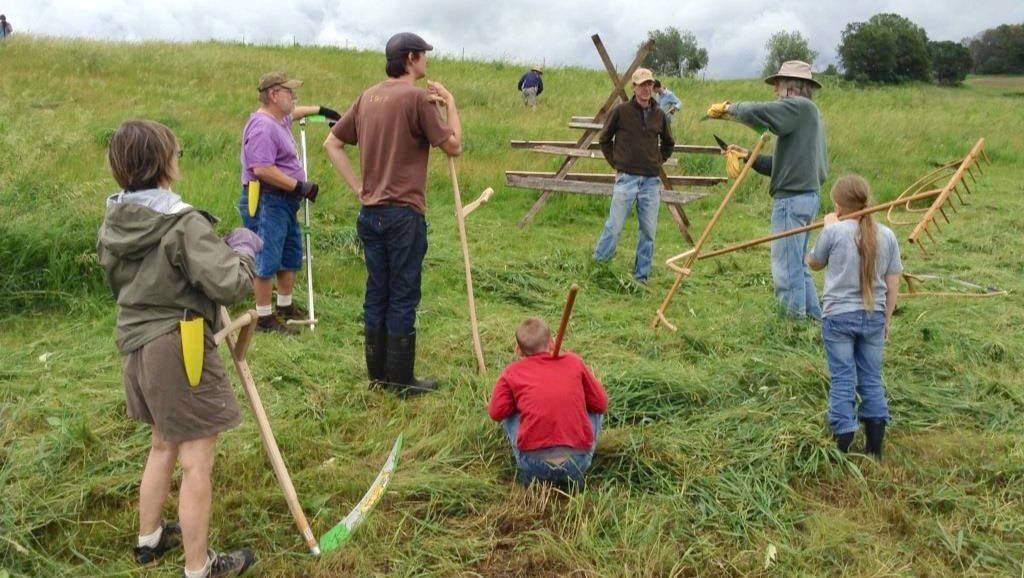
Scythe WorkshopsOne of the best ways to learn how to scythe is to come to one of my scythe workshops. I have been teaching an average of 3-5 scythe workshops per year since 2006. I have learned from some of the best, and the more I teach, the more I continue to learn. See my calendar for upcoming workshop dates.
|
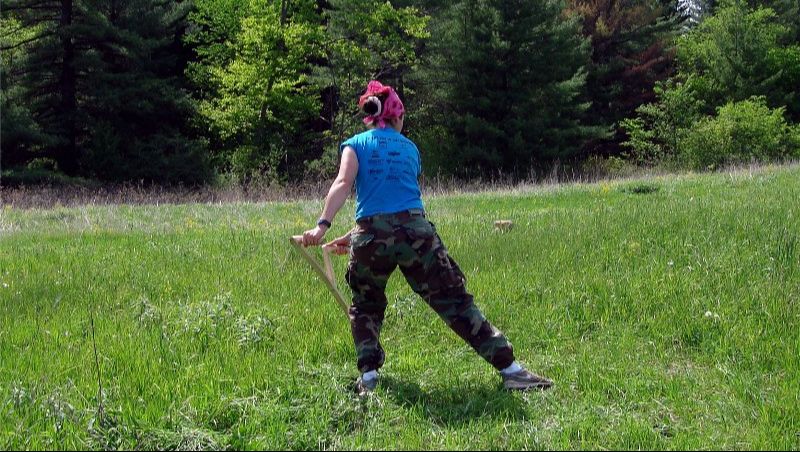
Scythe LessonsAn even better way to learn how to scythe is to see me for one-on-one instruction. I can teach beginner to master class levels. Rates are negotiable.
|
Scythe Forum
I am also the Administrator of the Facebook group, the Scything Improver's Forum. It's an international, educational forum for scythers to share info, to help each other develop the skill needed to utilize their scythes to their fullest potential. If you want to connect with fellow scythers and learn more about scything, please consider joining!
CONTACT One Scythe Revolution
To contact One Scythe Revolution send an email to Botan @ One Scythe Revolution . com, or call 507-454-4121.